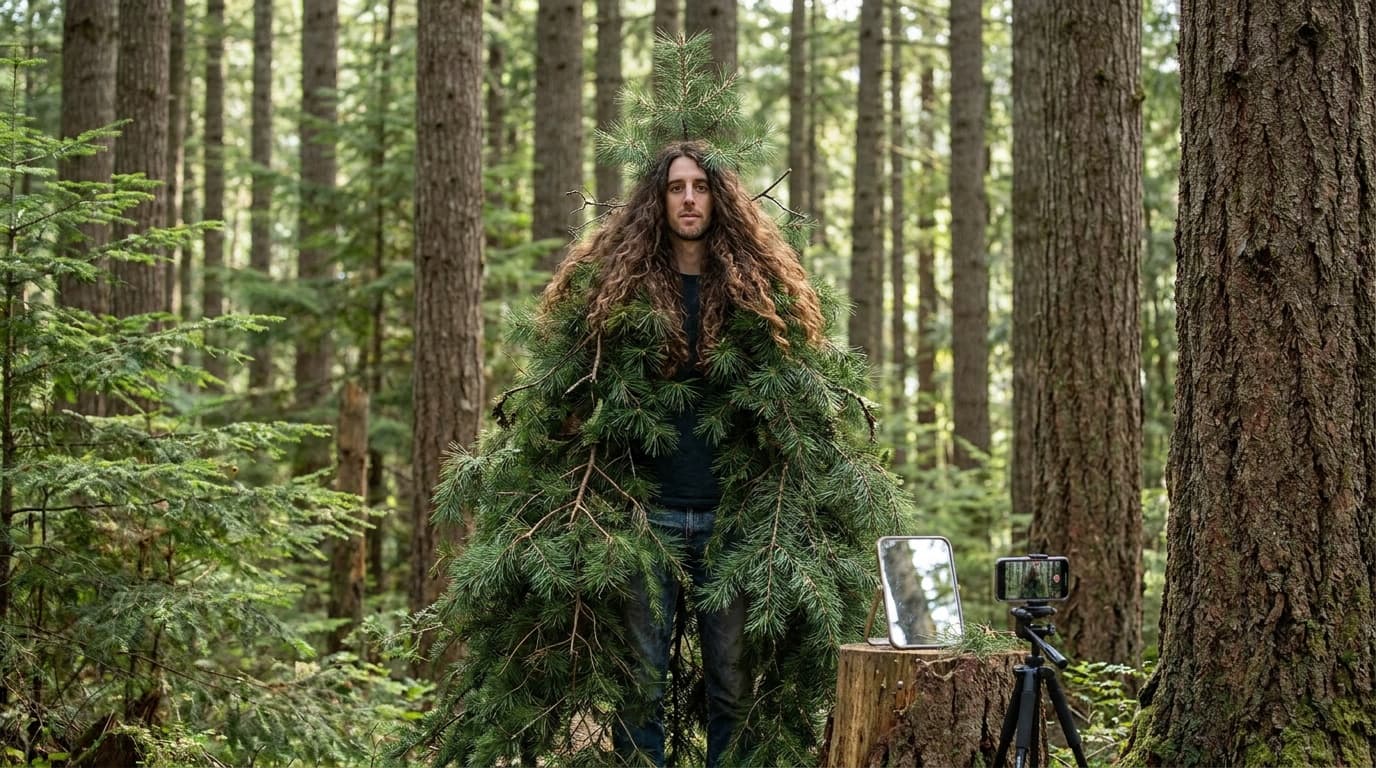
The challenge uses longer hair, structural supports, and a full-body pine shape.
Phil Grows His Hair Into A Pine Tree To Blend Into The Forest
Phil tests whether shaping his hair into a pine-tree silhouette helps him blend into a stand of pine trees.
By Phil, Adaptive Hair Correspondent
PHIL'S FOLLICLE REPORT - Published June 27, 2026 at 9:05 AM CDT; updated June 27, 2026 at 9:58 AM CDT
Commercial notice
What's up. Today I am testing whether I can use my hair to approximate a pine tree and blend into a stand of actual pines.
The idea is simple: if a setting has a dominant shape, I want to know whether hair can help me match it. In this case the dominant shape is a vertical trunk with branch tiers that widen toward the lower body.
For this challenge, I am using hair and a small amount of support material. I am not using a full costume.
The goal is to create a readable pine-tree silhouette and stand among pine trees long enough to measure whether the shape works.
Challenge Rules
Rule one: no full tree costume.
Rule two: all visible adaptation must come from hair, hair-support materials, and normal clothing.
Rule three: once in position, I have to remain mostly still and quiet.
Rule four: a passerby should be able to understand the attempt without a sign or explanation.
Target Visual blending within a pine stand.
Hair requirement Full-body taper, visible branch tiers, stable profile.
Pass condition Ten minutes in position without drawing significant attention.
Growth Phase
The first part of the process is waiting for hair to become available.
Short hair is not enough for this shape. Long hair gives the head and shoulders enough material to build a wider outline.
I started with length. Then I added volume. The volume mattered because the final shape had to read from several feet away.
Once there was enough material, I began training the top upward and the sides outward, then downward around the body. I used a mirror, a second mirror, a comb, several small pins, and enough time to keep the taper even.
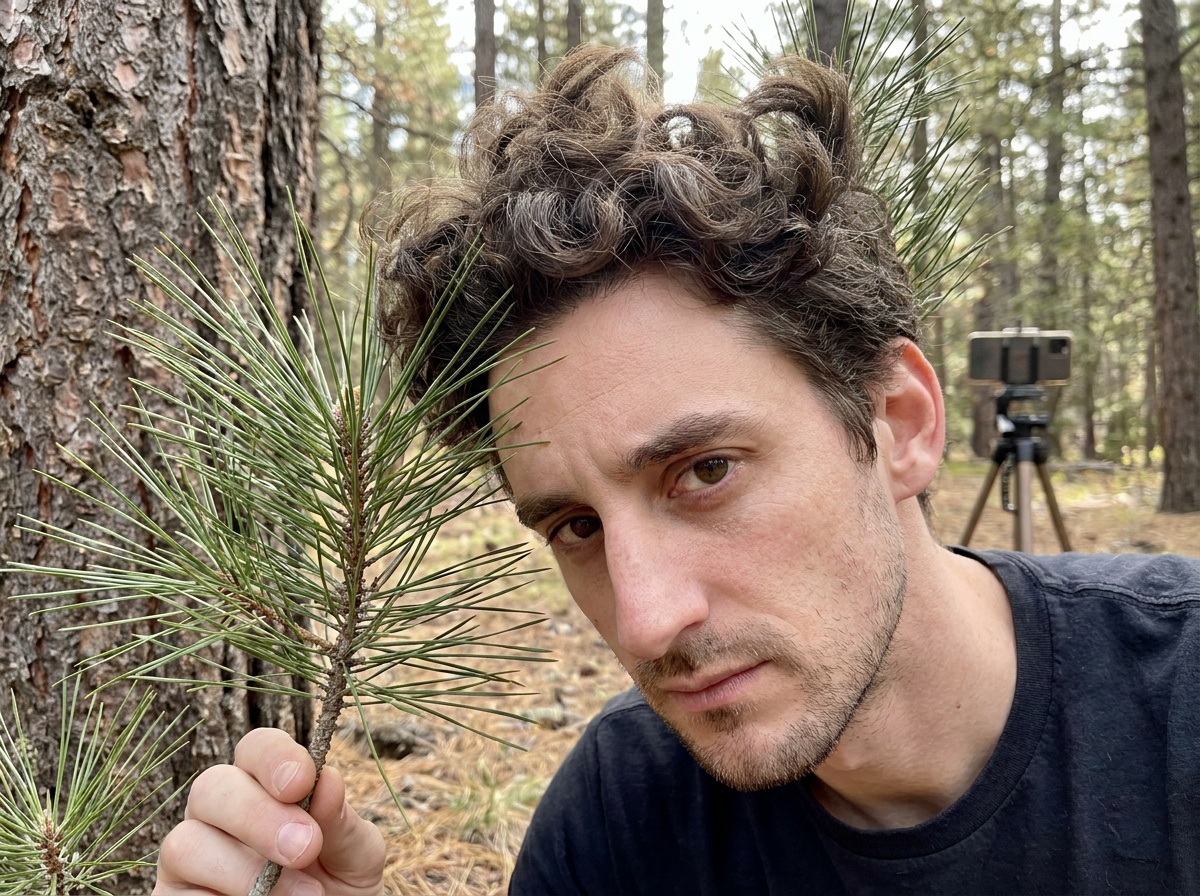
Selected process stills from the shape preparation are included below. The phone was placed on a small tripod to document the build.
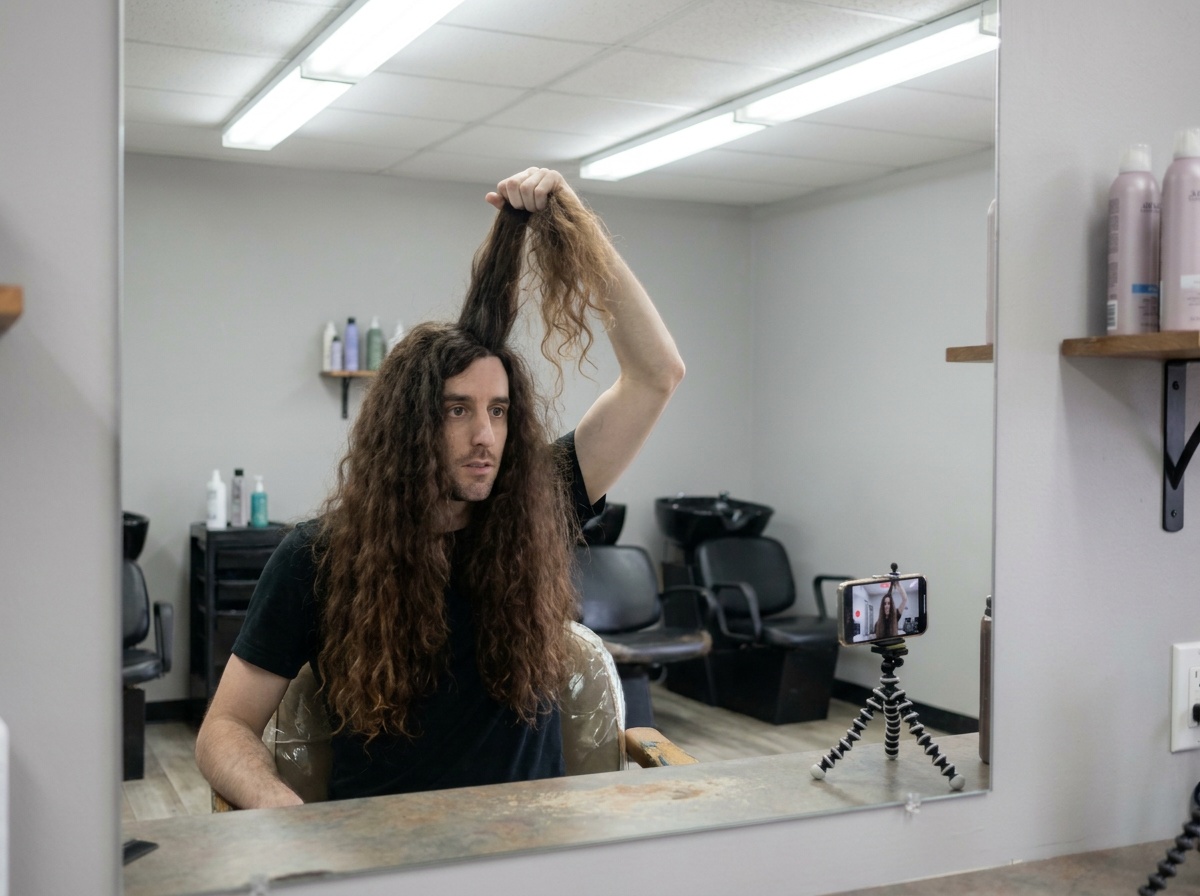
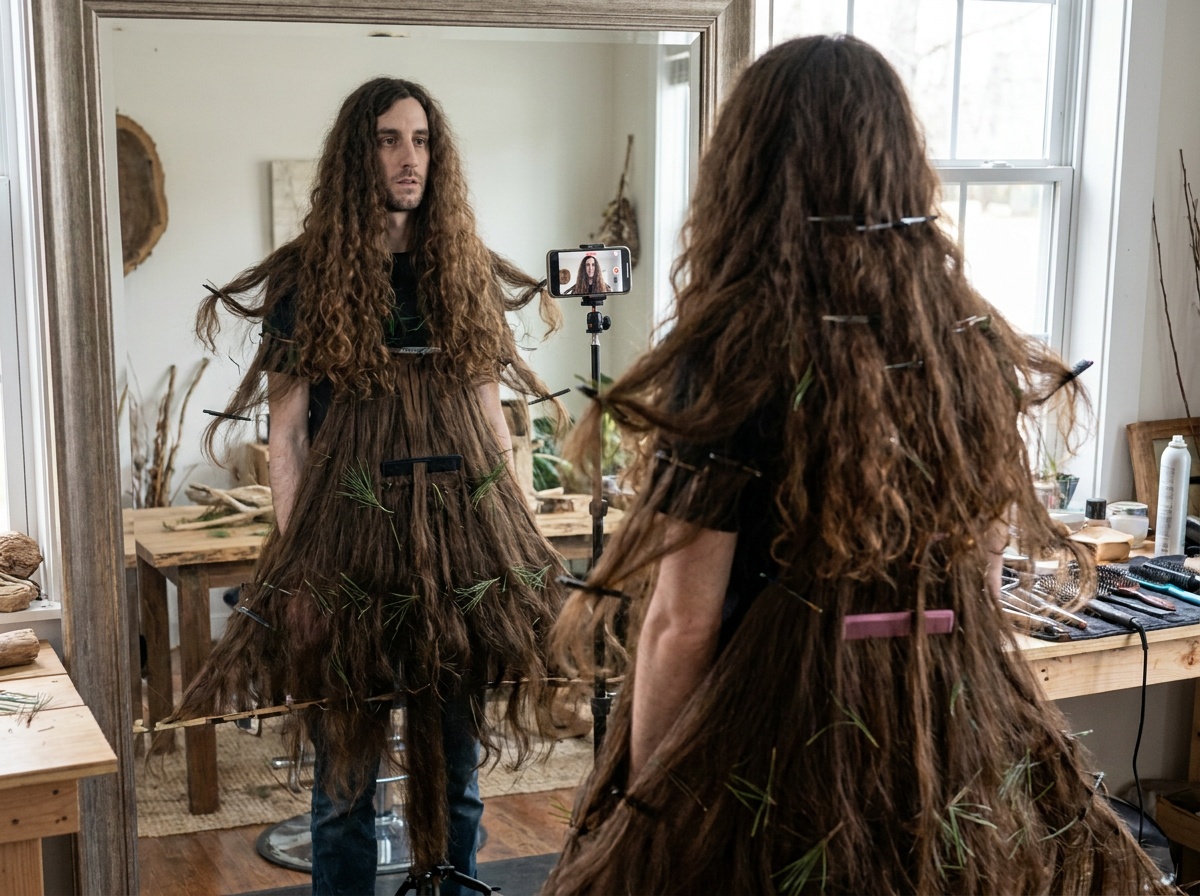
The hardest part was not making the hair stand up. The hardest part was making the shape look stable instead of styled.
A pine tree has a clear outline. I did not have bark or needles, so the hair had to carry the profile and I had to keep my posture consistent.
Field Attempt
I entered the forest at 2:14 p.m.
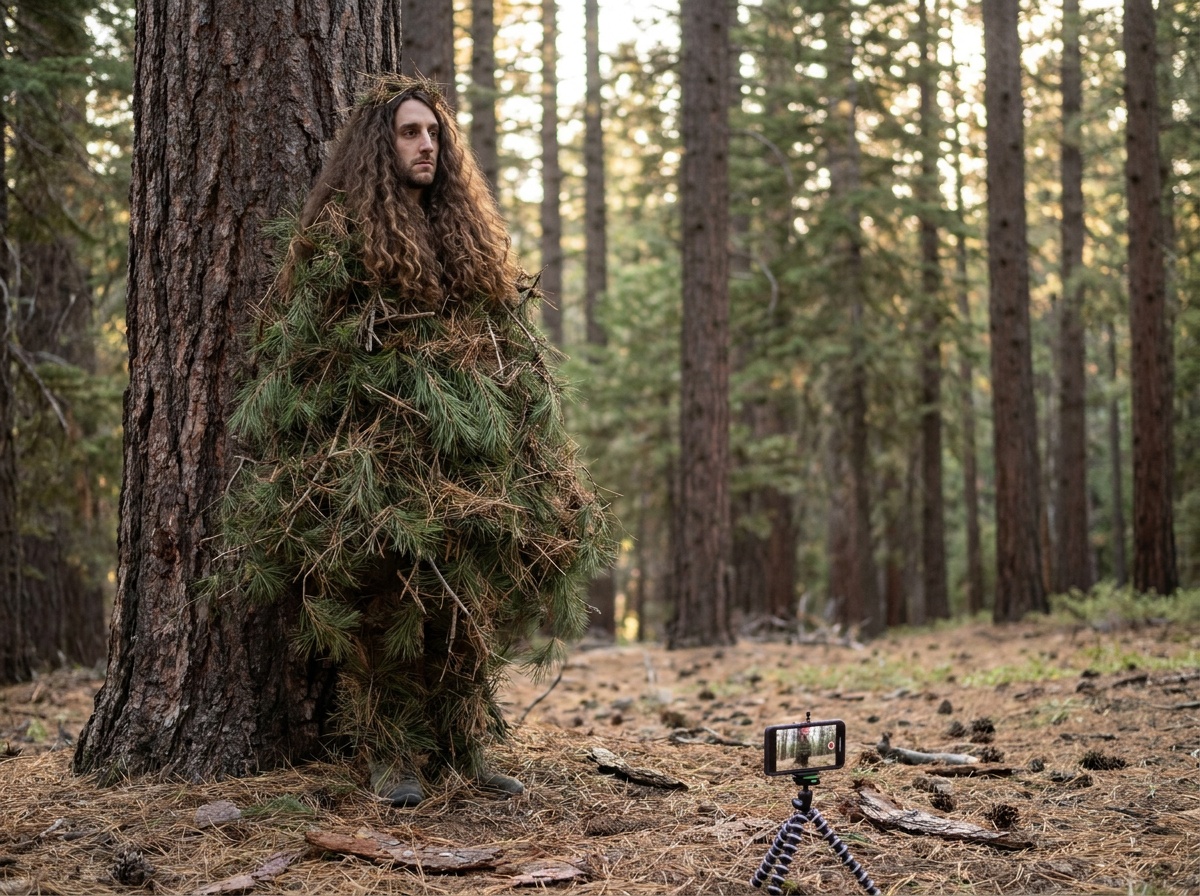
I chose a position beside a young pine with a similar height and branch line. I walked slowly to keep the hair structure from shifting before the test began.
The first measurable result was that the silhouette held.
That is not the same as full blending, but it meant the build survived the move from mirror to forest.
I stood beside the tree for seven minutes and forty seconds. During this period, I did not check my phone or explain the process out loud. I kept my shoulders low, my hair high, and my position steady.
At minute four, the wind picked up.
This was useful because it tested the support structure. The top moved slightly, but the lower branch tiers stayed in place.
Results
Did the hair fully blend into the forest?
Not fully.
Did it create a recognizable pine-tree profile?
Yes.
A hiker passed without stopping, which I am counting as a useful field result. The shape was noticeable, but it did not require immediate explanation.
The biggest success was the upper taper. For a short time, the hair cast a small pointed shadow on my forehead. It was not large, but it showed that the top structure held.
I also found one pine needle caught near my left ear. It most likely transferred during contact with a low branch, which means the hair was close enough to interact with the setting.
Final Rating
Assimilation: partial.
Shape stability: medium.
Visual match: strongest from ten feet away.
Would I try it again: yes, with stronger lower support and less product.
The main lesson is that hair can change how a body reads in a setting, but the shape has to remain stable and legible.
That is the pine-tree hair challenge. The next test will use a different setting and a different silhouette.
Commercial notice