The final challenge uses length, airflow, floor anchors, and a strict no-adjustment rule.
Phil Tests A Wind Tunnel Hair Lift And Does Not Survive The Final Run
Phil tests whether a full-body hair sail can create controlled lift in a wind tunnel, ending the Follicle Report after one final run.
By Phil, Adaptive Hair Correspondent
PHIL'S FOLLICLE REPORT - Published August 28, 2026 at 2:10 PM CDT
Commercial notice
Editor's note: This report is assembled from Phil's written test plan, phone audio, and the final camera file recovered after the wind-tunnel run.
What's up. Today I am testing whether hair can produce controlled lift when it is shaped into a full-body sail.
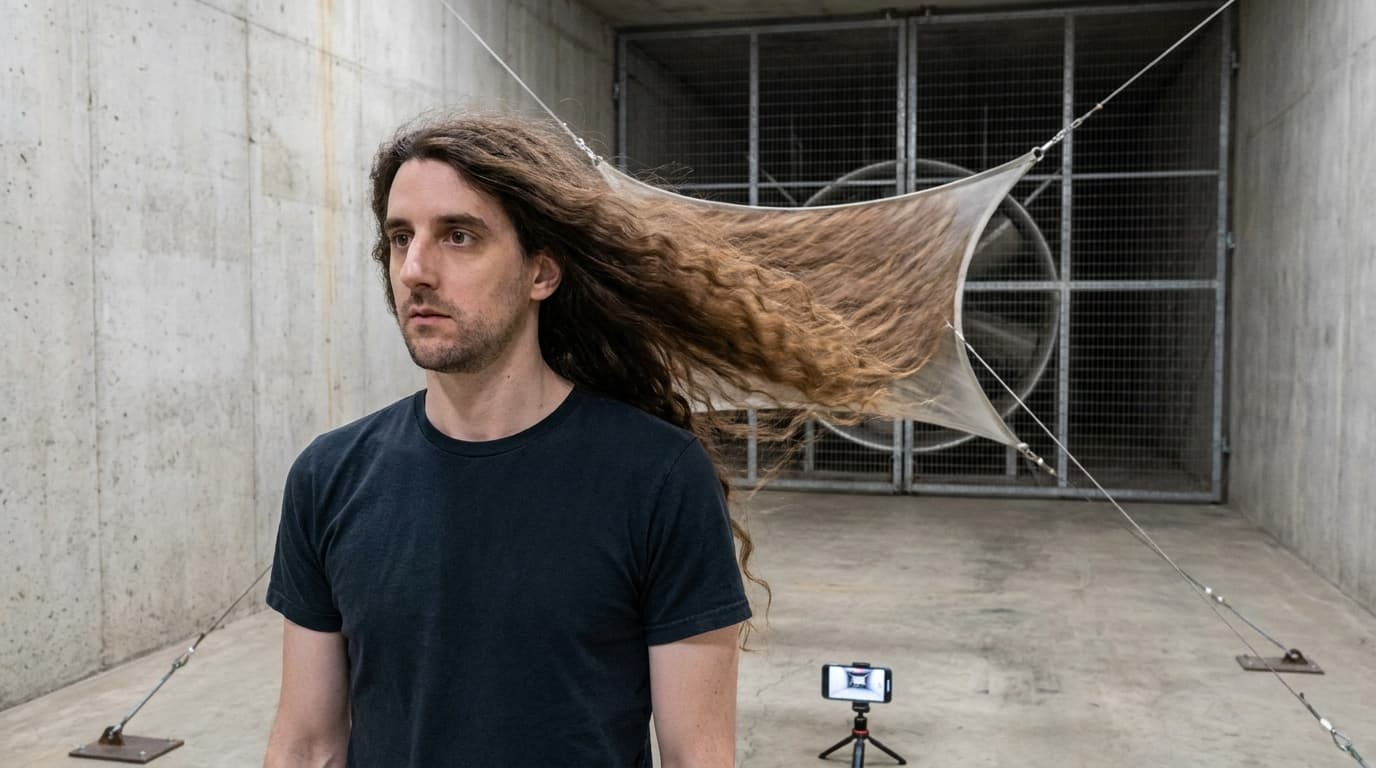
The target setting is a small industrial wind tunnel used for product testing. The goal is not flight. The goal is controlled upward pull while remaining standing.
This is the final Follicle Report because the experiment did not stay within the planned range.
Challenge Rules
Rule one: the lift surface has to be made from hair, hair ties, and light internal support.
Rule two: the face must remain visible.
Rule three: I cannot touch the hair once the fan reaches test speed.
Rule four: the pass condition is ten seconds of measurable upward pull without foot movement.
Target setting Industrial wind tunnel.
Hair strategy Full-body sail, rear spread, controlled airflow.
Pass condition Ten seconds of lift without stepping.
Build Phase
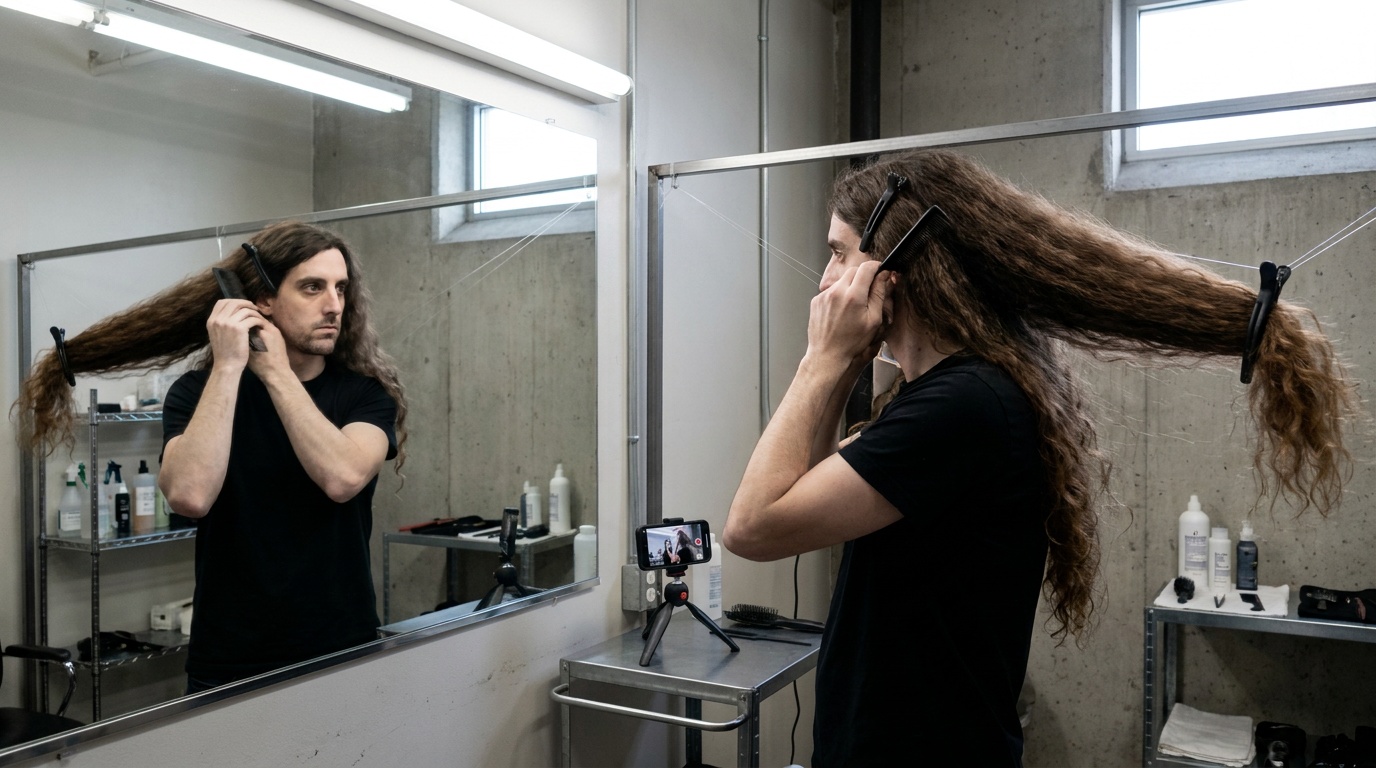
I started by brushing all hair back and dividing it into wide panels. A narrow panel pulled unevenly. A full circular shape moved too much and covered the face.
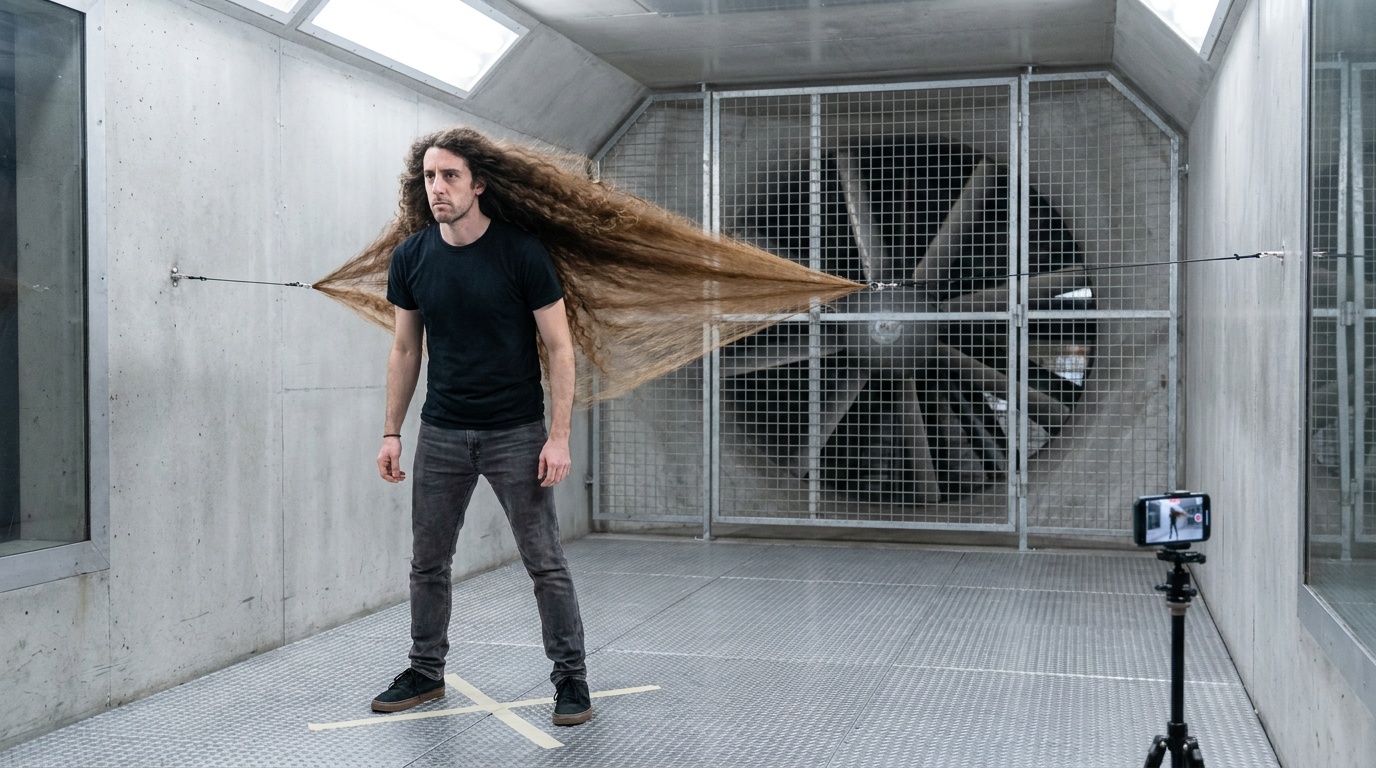
The working shape was a rear sail. It began at the crown, widened behind the shoulders, and continued down past the upper back. The bottom edge was tied to two light floor anchors so the hair would spread under airflow instead of wrapping forward.
The first fan test was useful. At low speed, the hair opened cleanly and the face stayed visible.
The process stills show the panel layout and the low-speed lift check.
Test Run
I entered the test area at 1:42 p.m.
The fan operator confirmed the first setting. The hair opened behind me and produced a steady backward pull. I kept both feet on the floor and did not adjust the left side when it lifted higher than expected.
At the second setting, the hair began to act less like a frame and more like a single surface. This was the first sign that the support lines were carrying more load than planned.
The pass condition required ten seconds. The camera audio records me counting to seven.
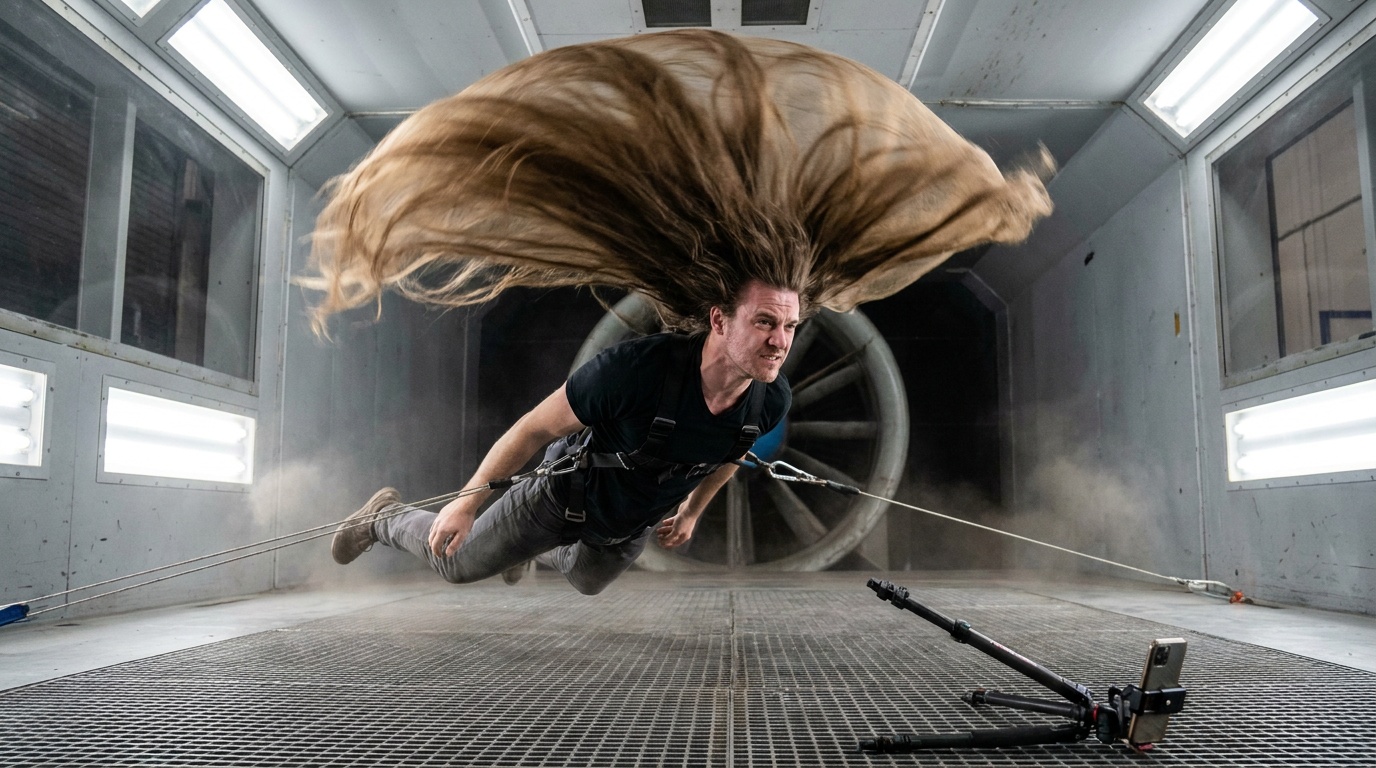
At eight, the rear sail lifted above shoulder height.
At nine, the floor anchors held but my stance did not.
The final visible frame shows the hair surface rising, my feet leaving the marked position, and the phone tripod tipping backward.
Incident Finding
The test did not pass.
According to the incident summary, death occurred from injuries sustained during uncontrolled lift and impact inside the wind-tunnel enclosure. The report lists the hair sail, airflow setting, and anchor geometry as contributing factors.
No other person was injured.
The test area was secured at 2:03 p.m.
Final Rating
Assimilation: not applicable.
Lift generation: confirmed.
Control: failed.
Repeatability: not recommended.
The main lesson is that hair can change how a body interacts with a room, but airflow changes the experiment quickly. Once hair becomes a load-bearing surface, the test is no longer about appearance.
That is the wind-tunnel hair-lift challenge.
Commercial notice