The challenge uses two braids, a chair test, and a low-key campfire entry.
Phil Uses Braids To Join A Campfire Circle
Phil tests whether twin braids help him enter a campfire circle without disrupting the group.
By Phil, Adaptive Hair Correspondent
PHIL'S FOLLICLE REPORT - Published June 27, 2026 at 9:20 AM CDT; updated June 27, 2026 at 10:42 AM CDT
Commercial notice
What's up. Today I am testing whether twin braids help me enter a campfire circle without disrupting the group.
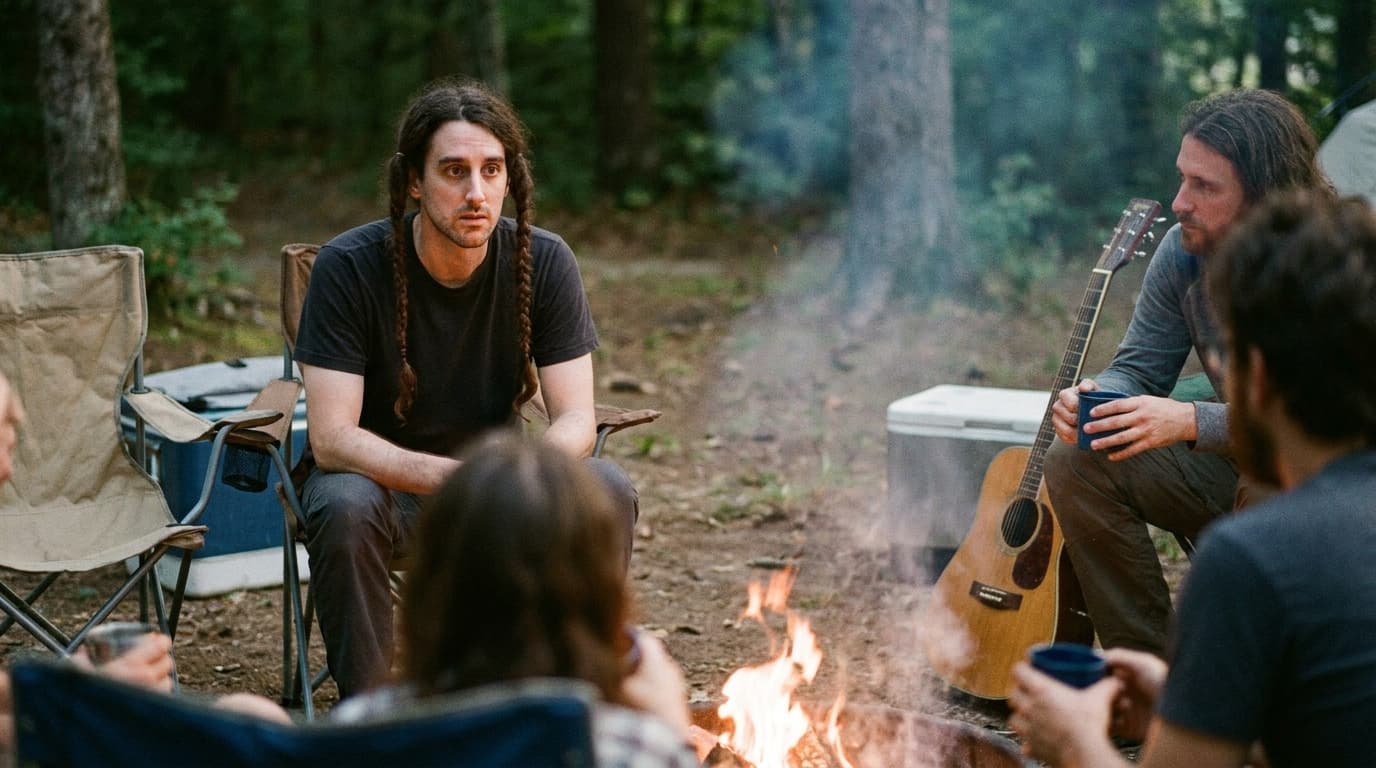
A campfire circle has visible entry cues: seating, fire position, mugs, a guitar, and how much space people leave between chairs.
You cannot just walk into the center of that.
You need the right hair.
The Premise
I have noticed that some groups read appearance before they read intention.
At a wedding, hair may need polish.
At a tax appointment, hair may need control.
At a campfire, hair needs to be controlled, smoke-tolerant, and informal.
For this report, I chose twin braids. They keep long hair contained, read as practical, and do not require constant adjustment around a fire.
Braid Build
The first step was establishing length. Short hair cannot hold the style well enough for the test.
Once the hair was long enough, I divided it into two sides and braided each side evenly. This mattered because uneven braids read as a distraction.
I used a comb, two ties, and one small mirror positioned behind me to check the back of the part.
The process images show the braid build and the first seating rehearsal. The goal was to look prepared without looking formal.
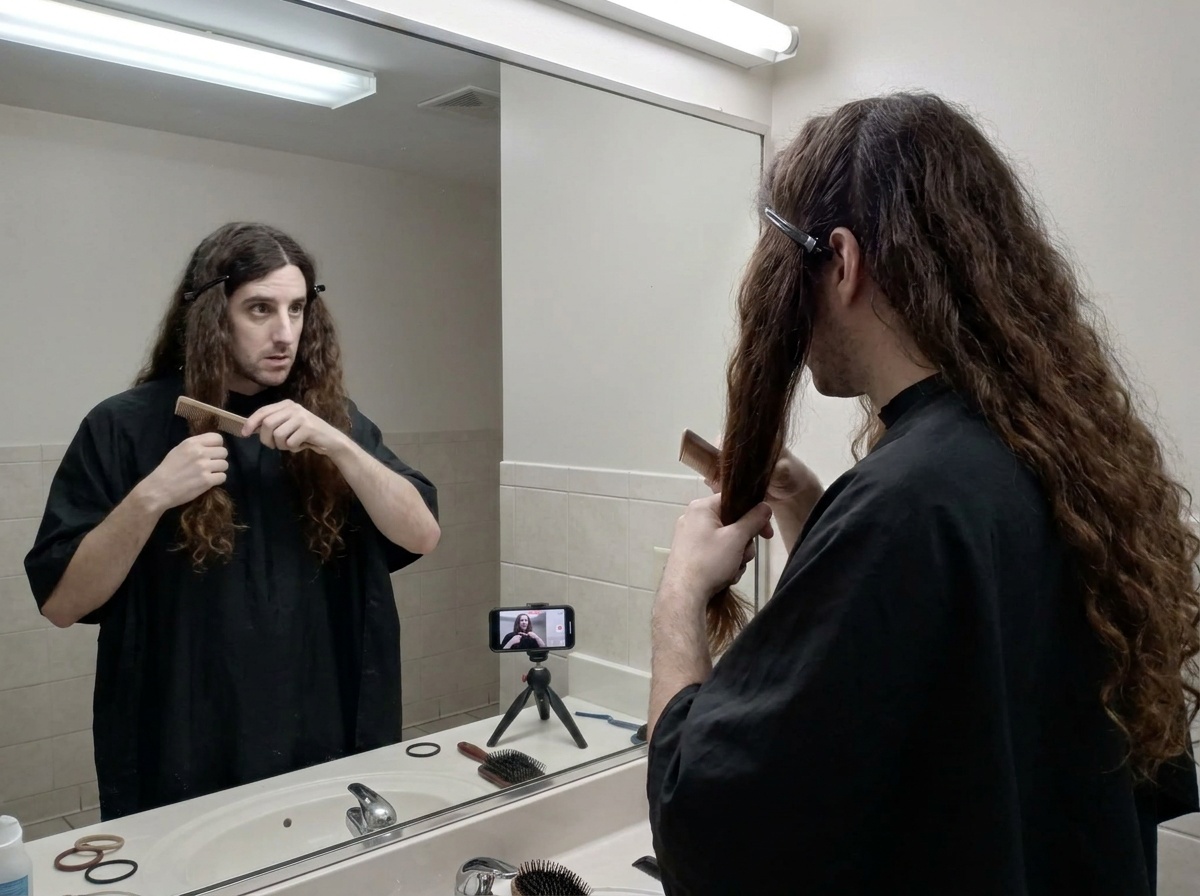
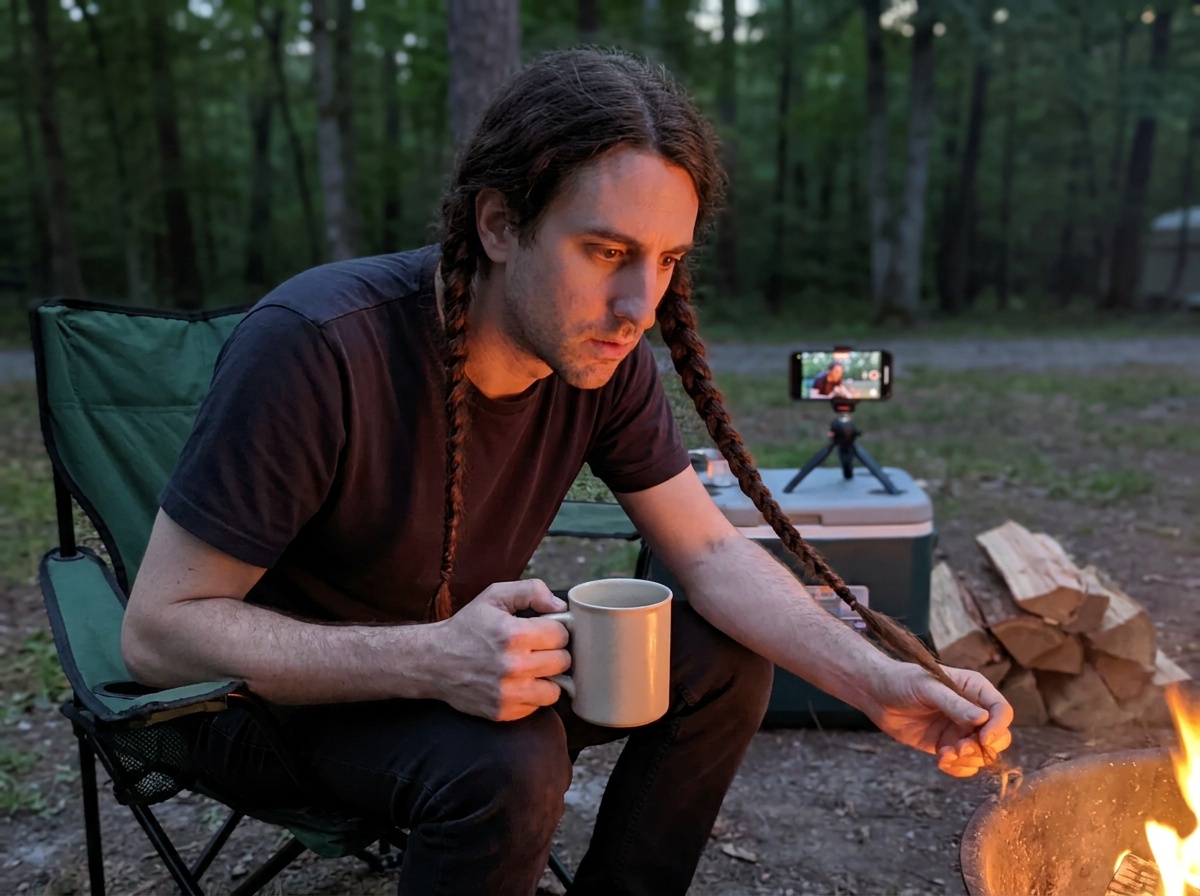
The braids immediately changed my posture. With loose hair, I kept moving it out of my face. With braids, the hair stayed controlled and let me focus on the entry.
This helped.
Circle Entry
I approached the campfire at 7:43 p.m., when there was still enough daylight to see the seating pattern and the fire had become the center of attention.
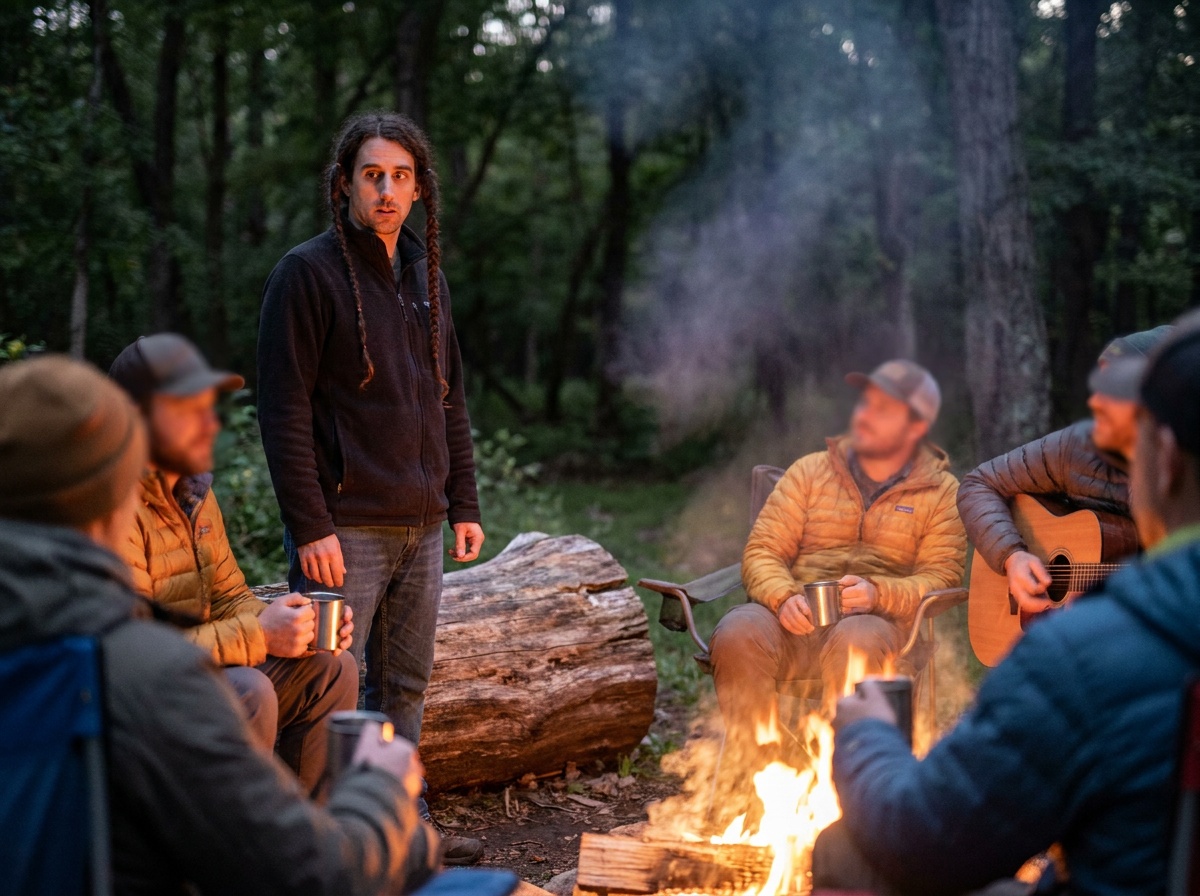
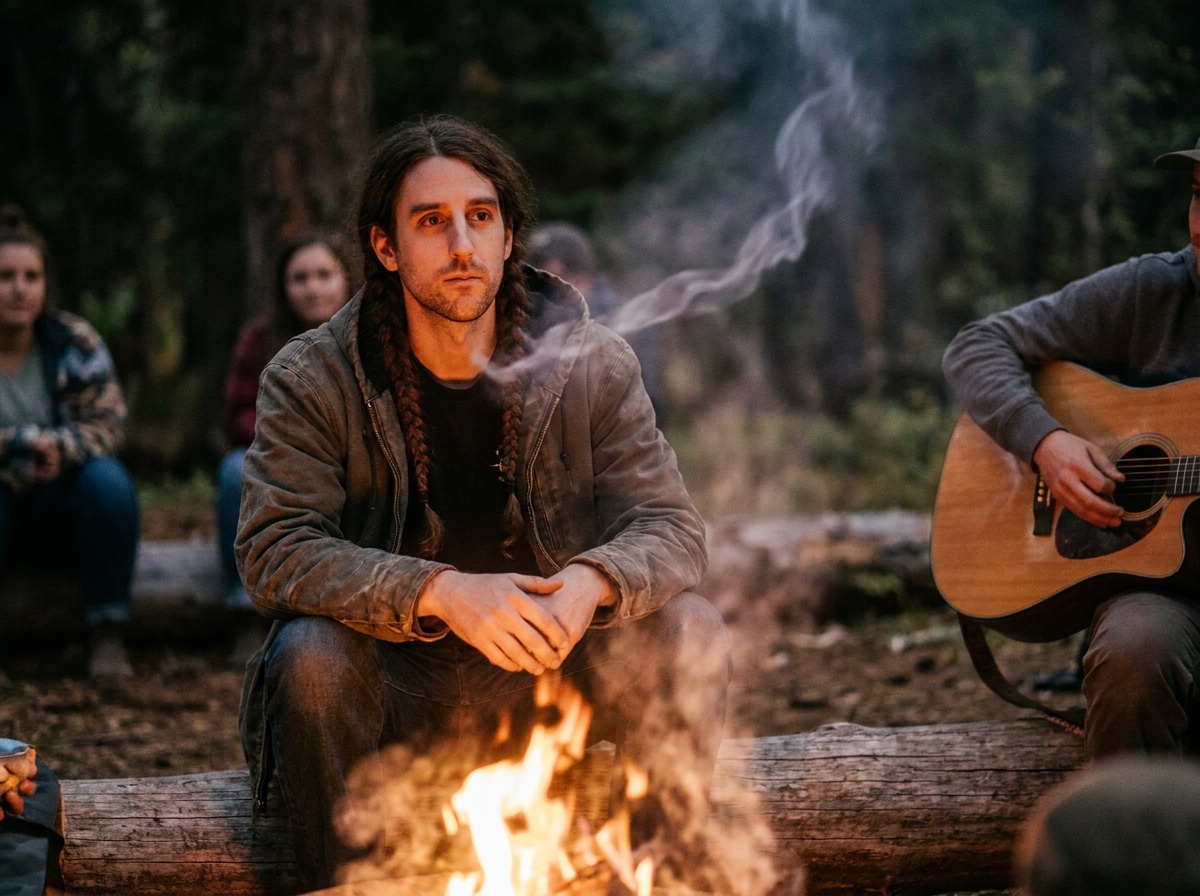
The circle contained six people, five chairs, one open log, a cooler, and a guitar.
For this test, I did not ask directly to join.
Instead, I stood near the open log and adjusted the left braid by half an inch. This gave me a moment to confirm whether the seat was actually open.
After eleven seconds, someone nodded.
I treated that as permission to sit.
I sat.
The smoke moved toward me almost immediately. This tested the style under real conditions. The braids held their shape, and I did not need to adjust them.
Entry point Open log, northeast side of circle.
Hair response Braids held shape under smoke pressure.
Group signal One nod, no follow-up question.
Social Testing
Once seated, I had to prove the braids were not only decorative.
I nodded during a story about a lake.
I looked into the fire when the guitar changed chords.
I laughed once during a story where the context was not fully available. This was risky, but the braids stayed still and did not pull attention back to me.
The guitar player began a song. I did not sing the first verse. I joined with a quiet hum near the second chorus after the group had settled into the song.
Results
The braids worked better than expected.
Nobody asked why I was there. Nobody moved the cooler away from me. At one point, someone passed me a bag of chips without asking whether I had been invited by a specific person. That is a strong field result.
There were limits. The braids did not give me permission to tell a long story. They did not make me central to the group. They only helped me enter without making the entry feel abrupt.
But they did secure provisional seating.
I would rate the integration as successful, with the note that hair can help with entry but cannot maintain the interaction alone. Timing and low-volume participation still matter.
That is the braid campfire challenge. The next report will test a different group setting.
Commercial notice